Spring 6 min read · Updated September 2026
How to mow a lawn properly (and get those stripes)
The right height, how often to cut, the one-third rule and how to get clean stripes and sharp edges at home.
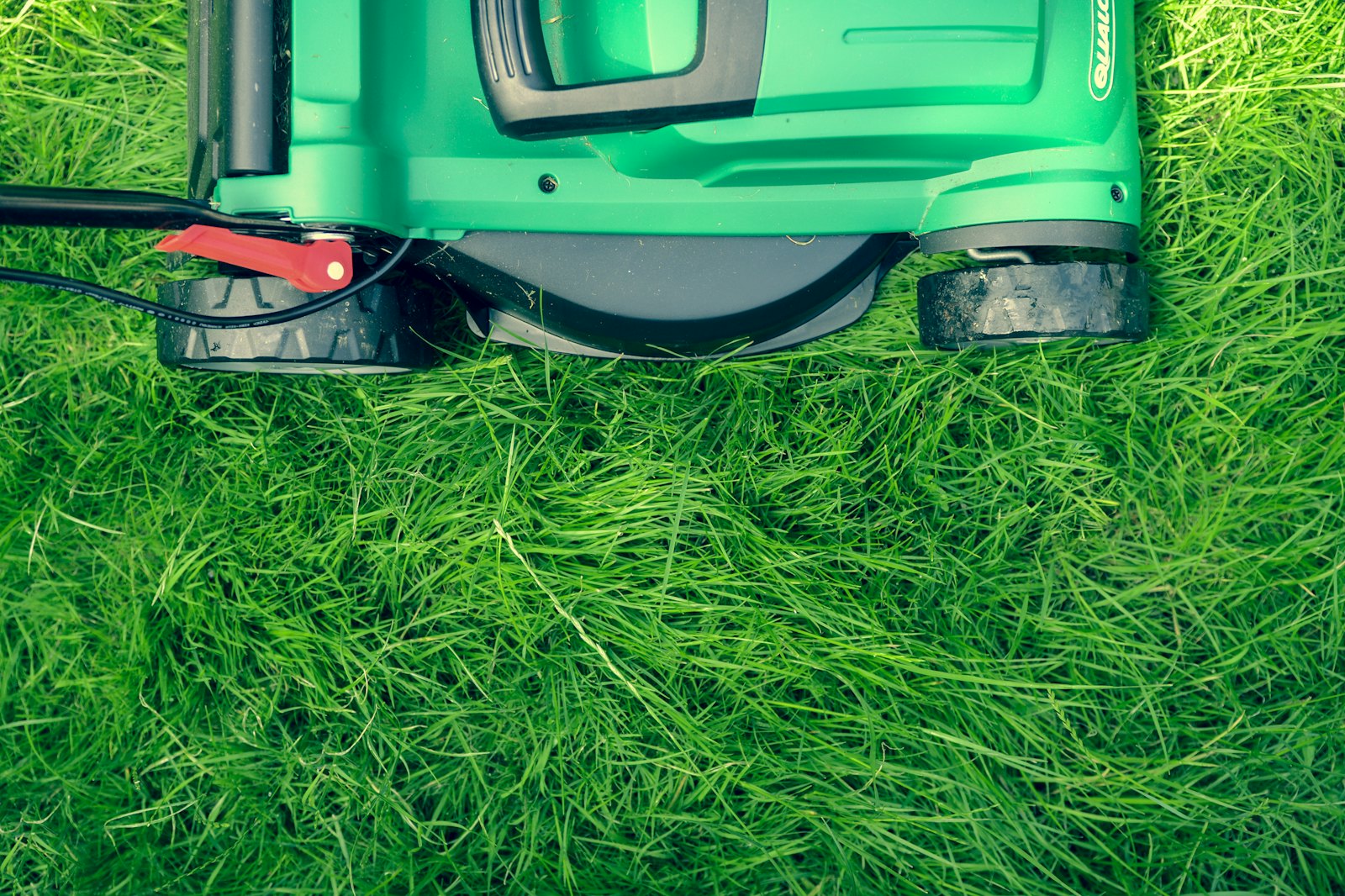
Mowing is the job that does the most for your lawn, and it's the one most people get wrong. Cut too short, too rarely or with a blunt blade, and the grass thins, weeds move in and moss takes over. Do it well and the lawn thickens up on its own.
The one-third rule
Never remove more than a third of the grass height in one cut. If your lawn is 60mm tall and you want it at 30mm, cut it to 40mm today and 30mm in a few days' time.
Taking off too much at once shocks the grass. It stops growing roots to repair its leaves, turns pale and opens gaps for weeds and moss.
What height to cut
| Type of lawn | Spring & autumn | Summer | Dry spells |
|---|---|---|---|
| Family or hard-wearing lawn | 30–40mm | 25–35mm | 40–50mm |
| Fine ornamental lawn | 15–25mm | 13–20mm | 25mm |
| Shady lawn | 40–50mm | 40mm | 50mm |
Most UK gardens have hard-wearing grass mixes, so the first row is the one to follow. Grass in shade needs more leaf to catch light, so always leave it longer.
How often to mow
- March and April: every 10–14 days, starting high.
- May to July: weekly. Twice a week if you want a really fine finish.
- August: weekly, or less often in a drought.
- September and October: every 7–14 days, raising the height as growth slows.
- November to February: only in a mild spell, on a high setting, when the ground is firm.
Step by step: a proper cut
- Pick a dry day. Wet grass clumps, tears and clogs the mower. Late morning, once the dew has gone, is ideal.
- Clear the lawn. Pick up toys, stones and sticks. They damage blades and can be thrown out at speed.
- Check the blade. A blunt blade tears grass and leaves ragged, brown tips. Sharpen it at the start of each season.
- Cut the perimeter first. Do two laps around the edge to give yourself turning space.
- Mow in straight, overlapping lines. Overlap each pass by a few centimetres so you don't leave strips.
- Change direction each time. Mowing the same way every week pushes grass flat in one direction and can cause ridges.
- Finish the edges. Trim with long-handled shears or a strimmer held vertically.
How to get stripes
Stripes aren't different lengths of grass. They're light bouncing off grass bent in opposite directions. Grass bent away from you looks lighter, and grass bent towards you looks darker.
- You need a mower with a rear roller, or a striping kit for a rotary mower.
- Mow a straight line along the longest, most visible edge first and use it as your guide.
- Turn at the end and come back alongside it. Turn on the headland you cut at the start, not on the stripes themselves.
- Stripes show best when the grass is 25–40mm and the lawn is dense.
Collect or mulch the clippings?
Both work. Collecting gives the neatest finish and helps stop thatch building up, which makes it the better choice for most of the year. Mulching (leaving very fine clippings on the lawn) returns nutrients and moisture. It's useful in summer, but only on frequent cuts when the clippings are short.
Never leave long, wet clumps of clippings on the lawn. They'll yellow the grass beneath in a couple of days.
Edges make the garden
Crisp edges make the whole garden look looked-after, even when the lawn itself isn't perfect. Re-cut the edge with a half-moon edger in spring, using a plank as a straight guide. Then trim the overhang with edging shears after every cut. A metal or timber edging strip saves time if you hate the job.
Rather we did it for you?
Fernhill Garden Care looks after gardens across Ashford, Wye, Charing, Hamstreet, Kennington, Willesborough, Great Chart and Tenterden. Book a free visit and we'll quote for exactly what your garden needs.
Book a free visit